
CPR (Cardiopulmonary Resuscitation) and First Aid training are indispensable parts of any comprehensive lifeguard training program. These skills are essential for lifeguards, who are often the first responders to emergencies at pools, beaches, and water parks. The American Lifeguard Association (ALA) emphasizes CPR and First Aid training in their lifeguard certification courses, ensuring that every lifeguard is prepared to handle a wide range of emergencies, both in and out of the water.
The role of a lifeguard extends far beyond supervising swimmers. Lifeguards are responsible for maintaining safety and responding quickly to any potential life-threatening situations. This often includes performing CPR on individuals who have stopped breathing or providing First Aid to someone who has sustained an injury. Without these critical skills, lifeguards would not be fully equipped to protect those under their care.
CPR and First Aid training provide lifeguards with the skills to respond to a range of emergencies, including cardiac arrests, drowning incidents, and injuries. CPR training enables lifeguards to deliver life-saving compressions and rescue breaths, which can be crucial in keeping a victim alive until professional medical help arrives. First Aid training equips lifeguards to address various injuries, from minor cuts and scrapes to more serious conditions like broken bones and head injuries.
When someone suffers cardiac arrest or stops breathing, every second counts. Lifeguards trained in CPR can start chest compressions immediately, potentially saving lives before paramedics arrive.
In many locations, defibrillators are available, and lifeguards must be trained to use them effectively. AEDs can restore a normal heart rhythm in someone experiencing sudden cardiac arrest.
Whether it’s a minor cut, a sprained ankle, or a more serious injury like a broken limb or head trauma, lifeguards are often the first on the scene and must know how to stabilize a victim until help arrives.
Components of CPR and First Aid Training in Lifeguard Courses
The American Lifeguard Association integrates CPR and First Aid into its lifeguard training program to ensure that lifeguards are fully prepared to handle emergencies. These components of the training are essential to provide a comprehensive approach to safety and rescue.
CPR training is one of the most critical elements of lifeguard certification. Lifeguards learn how to perform CPR on adults, children, and infants, as each requires different techniques. Lifeguard training includes instruction on the following aspects of CPR:
Lifeguards learn the proper hand placement and compression depth for performing CPR on adults, children, and infants. They also learn how to maintain the appropriate compression rate, typically around 100-120 compressions per minute.
Along with chest compressions, lifeguards are taught how to provide rescue breaths using a bag-valve-mask (BVM) or performing mouth-to-mouth resuscitation. Rescue breaths help supply oxygen to the victim’s lungs when they cannot breathe independently.
Lifeguards are often part of a team, and as such, they must know how to perform CPR in coordination with another rescuer. In a two-rescuer situation, one person performs chest compressions while the other provides rescue breaths, allowing for continuous and effective care.
Training in the use of Automated External Defibrillators (AEDs) is an essential part of CPR training. Lifeguards are taught to recognize cardiac emergencies and use an AED to shock the heart back into a normal rhythm if necessary.
First Aid is another crucial part of lifeguard training, ensuring that lifeguards are capable of responding to various injuries and medical conditions. First Aid training covers a broad range of situations that lifeguards might encounter, including:
Lifeguards must manage both minor cuts and severe bleeding. First Aid training teaches lifeguards how to use bandages and apply pressure to control bleeding until emergency medical services arrive.
Lifeguards might encounter burns, particularly at water parks where hot surfaces or equipment can cause injuries. First Aid training includes methods for treating burns, including cooling the burn and applying sterile dressings.
In high-impact environments like pools and beaches, fractures and sprains are common. Lifeguards are trained to immobilize injured limbs using splints, and they learn how to transport injured individuals safely to avoid further harm.
Handling individuals with potential spinal injuries requires special care. First Aid training equips lifeguards with the skills to stabilize a victim’s head, neck, and spine to prevent further injury. This is especially important in aquatic settings where rough waters or diving accidents may cause such injuries.
Lifeguards working in outdoor settings, such as beaches or outdoor pools, must know how to recognize and treat heat-related illnesses like heat exhaustion and heatstroke. First Aid training teaches lifeguards how to cool down an individual and manage hydration until professional help arrives.
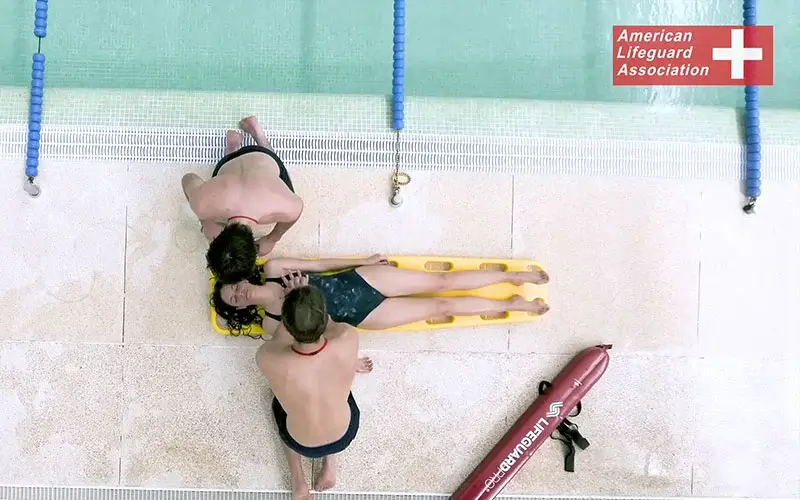
Lifeguards must maintain their certifications in both CPR and First Aid, as these skills can diminish over time without regular practice. The American Lifeguard Association requires lifeguards to renew their certifications every two years to ensure they stay proficient in the latest safety protocols and techniques.
To ensure continued proficiency, lifeguards must undergo recertification courses. The recertification process includes a review of CPR techniques, First Aid practices, and emergency rescue protocols. During the recertification course, lifeguards are tested on their skills and knowledge to ensure they remain ready to respond to emergencies.
Beyond basic certification and recertification, lifeguards can pursue advanced training opportunities. For example, some lifeguards may choose to become CPR or First Aid instructors, enabling them to train new lifeguards in these life-saving skills. Others may pursue specialized certifications, such as water rescue or lifeguard management, to further their careers and increase their effectiveness in emergencies.
CPR and First Aid skills are constantly evolving as new medical research becomes available. Lifeguards must commit to continual learning and professional development to stay current with the latest safety protocols. Lifeguards who engage in ongoing education are better prepared to handle emergencies and are more likely to succeed in their careers.
CPR and First Aid are perishable skills, meaning they must be practiced regularly to remain effective. Lifeguards who only rely on their initial training may find their skills diminish over time. Regular in-service training, where lifeguards practice CPR and First Aid techniques, helps ensure they remain confident and capable in real-life situations.
Many employers require lifeguards to participate in regular training sessions to keep their skills sharp. In addition to formal recertification courses, lifeguards often take part in pre-service evaluations, where their abilities are tested before they begin their duties. This ensures that lifeguards are fully prepared to respond to emergencies immediately.
Lifeguards play a vital role in workplace safety, particularly in high-traffic aquatic environments. Their knowledge of CPR and First Aid ensures that injuries and medical emergencies are managed quickly and effectively, minimizing harm to victims and potentially saving lives.
In any workplace, emergencies can happen. Lifeguards are trained to respond immediately to injuries, illnesses, and medical emergencies, ensuring the safety of patrons. Whether a cardiac event, drowning, or severe injury, lifeguards’ training in CPR and First Aid often makes the difference.
The American Lifeguard Association adheres to national standards for CPR and First Aid training, ensuring that lifeguards are trained to meet the highest safety requirements. These standards are set by organizations such as the American Heart Association (AHA) and the American Red Cross, which outline best practices for performing CPR and providing First Aid in emergencies.
CPR and First Aid are essential components of lifeguard training, equipping lifeguards with the skills and knowledge they need to respond to emergencies. Whether performing life-saving CPR on a drowning victim or providing First Aid to someone with a broken bone, lifeguards play a critical role in protecting the health and safety of individuals in aquatic environments.
For those seeking lifeguard training that includes comprehensive CPR and First Aid instruction, the American Lifeguard Association offers a wide range of courses designed to meet national standards. Lifeguards are encouraged to continually improve their skills through ongoing training, recertification, and advanced education opportunities.
Becoming a lifeguard requires dedication, and CPR and First Aid are just the beginning. With the proper training, lifeguards can make a significant difference in their communities, ensuring that aquatic environments remain safe for everyone.